
The Greatest Gift We Can Give Is Trust
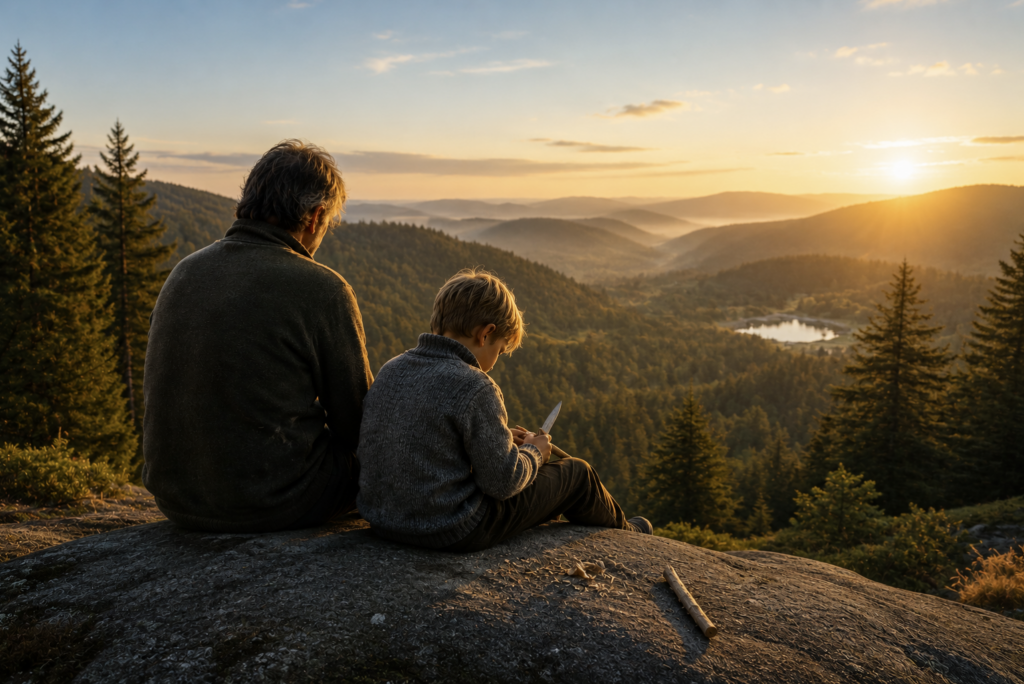
My son was still a young boy when I gave him his first knife. Not a toy.
A real Finnish knife. Sharp enough to cut wood. Sharp enough to demand respect.
I made a sheath for it from deer leather and decorated it with small beads. It became his knife.
Before he ever carved a piece of wood, we sat down together.
The conversation wasn’t long. There were only a few simple rules.
Respect the knife. Pay attention. Never hurry.
Then I stepped back.
Learning Begins When Trust Begins
Many people believe children first need confidence before they can be trusted.
I have come to believe the opposite. Children often develop confidence because someone trusted them first.
Not blindly. Not carelessly. But thoughtfully.
Responsibility grows when responsibility is experienced.
The Day the Teachers Were Shocked
Years later, my son accidentally took that knife to a primary school excursion.
His teachers were horrified. To them, it was a dangerous object.
For my son, it was a familiar tool.
He had learned to respect it long before he learned to use it well.
He never injured himself.
Neither did his sister with hers.
Not because they were unusually careful.
Because respect had become part of the learning process from the very beginning.
The Brain Learns Through Responsibility
Modern neuroscience tells us that learning is not built on information alone.
The brain changes through experience.
When children are trusted with age-appropriate responsibility, they develop far more than practical skills.
They learn attention. Self-control. Judgement. Confidence.
Not because someone explained these qualities.
Because they lived them.
Protecting Children Is Not the Same as Preparing Them
As parents, our instinct is to protect.
That instinct is valuable. But protection has two forms.
One removes every challenge.
The other stays close while allowing the child to meet the challenge.
The second requires more patience.
But it teaches far more.
Children cannot develop judgement if they are never allowed to make decisions.
They cannot learn responsibility without carrying a little responsibility.
A Lesson Far Beyond Knives
This story is not really about knives. It could just as easily be about lighting a campfire.
Using a saw. Climbing a tree. Building a shelter.
Or shooting a traditional bow.
The object is never the lesson.
The lesson is learning to respect both the world and your own abilities.
What Children Remember
Years from now, children rarely remember every word we said. They remember how we made them feel.
Whether we believed in them. Whether we stayed calm when they struggled.
Whether we trusted them enough to let them grow. Perhaps that is one of the greatest responsibilities of being a parent.
Not to remove every obstacle.
But to walk beside them until they no longer need us to.
Between the Islands
A young pine
does not become strong
because the wind is absent.
It becomes strong
because the wind is gentle enough
to let it grow.
Mellansken in One Sentence
Children grow into responsibility when someone trusts them enough to let them practise it.
Key Takeaways
- Trust and responsibility grow together.
- Children learn through real experiences, not explanations alone.
- Age-appropriate challenges help develop judgement, attention and confidence.
- Good parenting balances protection with opportunity.
- The greatest lessons are often taught quietly, through everyday moments.
Science Behind This Article
Research in developmental psychology and neuroscience increasingly shows that children benefit from age-appropriate autonomy, meaningful responsibility and supportive guidance.
Albert Bandura’s work on self-efficacy, Carol Dweck’s research on growth mindset, and studies on risky play by researchers such as Ellen Beate Hansen Sandseter suggest that children develop resilience, sound judgement and confidence when they are allowed to explore manageable risks in a safe, supportive environment.