
Neuroplasticity
„You can’t teach an old dog new tricks.“
Most of us have heard that expression. It sounds convincing. It has been repeated for generations.
The problem is that modern neuroscience tells a very different story.
A Forest Never Stops Growing
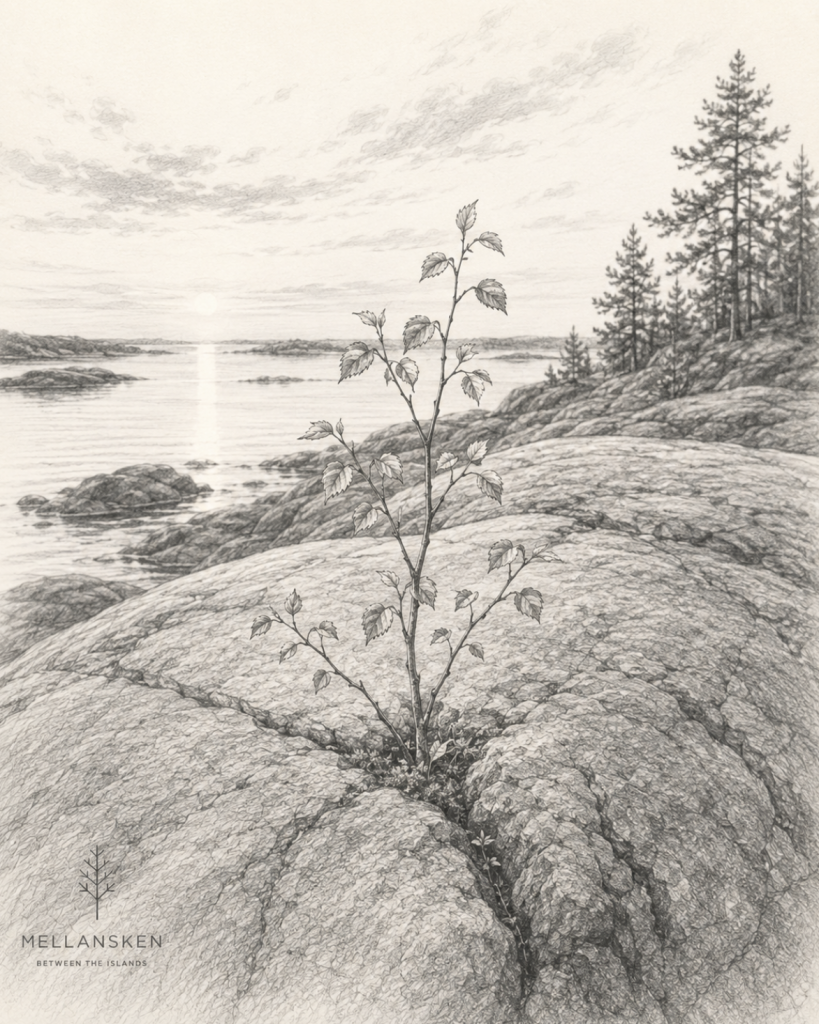
Imagine walking through a pine forest in the Stockholm Archipelago.
A winter storm has passed. One old tree has fallen. Sunlight now reaches the forest floor.
Within weeks, small plants begin to grow where nothing had grown before.
The forest hasn’t become a different forest.
It has simply adapted.
Your brain works in much the same way.
What Does Neuroplasticity Mean?
The word sounds complicated. In reality, its meaning is beautifully simple.
Neuro refers to the nervous system.
Plasticity means the ability to change and adapt.
Together, they describe one of the brain’s greatest strengths:
Its ability to reorganise itself throughout life.
The Brain Is Always Changing
For many years, scientists believed that the adult brain hardly changed at all.
Children learned. Adults simply used what they already knew.
Today we know something very different. Every new experience changes the brain.
Learning a language. Playing the piano. Recovering after an injury.
Or shooting a traditional bow.
None of these activities leave the brain untouched.
Every Experience Leaves a Trace
Think back to the first time you rode a bicycle. Balancing felt impossible.
Every movement demanded your full attention.
Today, you probably ride without thinking about any of those details.
The bicycle hasn’t changed.
Your brain has. Learning always leaves traces.
Most of them are simply invisible.
Billions of Tiny Conversations
Your brain contains roughly 86 billion neurons.
They communicate through trillions of connections called synapses.
Whenever you repeat a movement, solve a problem or experience something new, these networks become slightly more efficient.
Some connections grow stronger. Others gradually disappear because they are no longer needed.
The brain is constantly refining itself.
Why Repetition Works
Many beginners ask me the same question.
„How many arrows do I need before instinctive shooting starts to feel natural?“
There is no magic number.
Every arrow gives the brain another opportunity to compare expectation with reality.
Tiny adjustments happen after every release. Most of them without conscious awareness.
Learning doesn’t happen during one perfect shot.
It grows through hundreds of ordinary ones.
Instinctive Archery Is Brain Training
People often think they are training their arms. Or their shoulders. Or their technique.
Of course they are. But something even more remarkable is happening.
They are training their brain.
Every arrow strengthens communication between vision, balance, movement, attention and memory.
Over time, these systems begin working together more efficiently.
The shot feels easier. Not because it requires less effort.
But because the brain requires less conscious control.
Scientists Have Known This for Decades
In 1949, the Canadian psychologist Donald Hebb proposed an idea that later became one of neuroscience’s most famous principles.
„Neurons that fire together, wire together.“
Although simplified, the phrase captures an essential truth.
The more often certain neural pathways are activated together, the stronger and more efficient they become.
Practice is not repetition for repetition’s sake.
Practice is how the brain builds better networks.
Why This Matters Beyond Archery
Neuroplasticity explains far more than learning to shoot a bow.
It explains how children learn to speak. How adults learn new skills. How musicians improve.
How stroke patients recover movement. How teachers help students grow.
And why none of us should ever say:
„I’m too old to learn.“
Your brain has been proving the opposite every day of your life.
Between the Islands
A pine tree never notices
the day it became taller.
Neither do we.
Mellansken in One Sentence
Every experience changes your brain. The only question is what you choose to experience. the Islands — Mellansken
Nature never changes overnight. Neither does the human brain. A coastline is shaped by countless waves.
A forest grows one season at a time. Learning follows the same quiet rhythm. Almost invisible from one day to the next.
Remarkable when we look back.
Science Behind This Article
This article is based on decades of research in neuroscience and motor learning, including the work of:
- Donald O. Hebb — The Organization of Behavior (1949)
- Eric R. Kandel — Nobel Prize research on learning and memory
- Michael Merzenich — Adult neuroplasticity
- Eleanor Maguire — Structural brain changes in London taxi drivers
- Norman Doidge — The Brain That Changes Itself (popular science introduction)